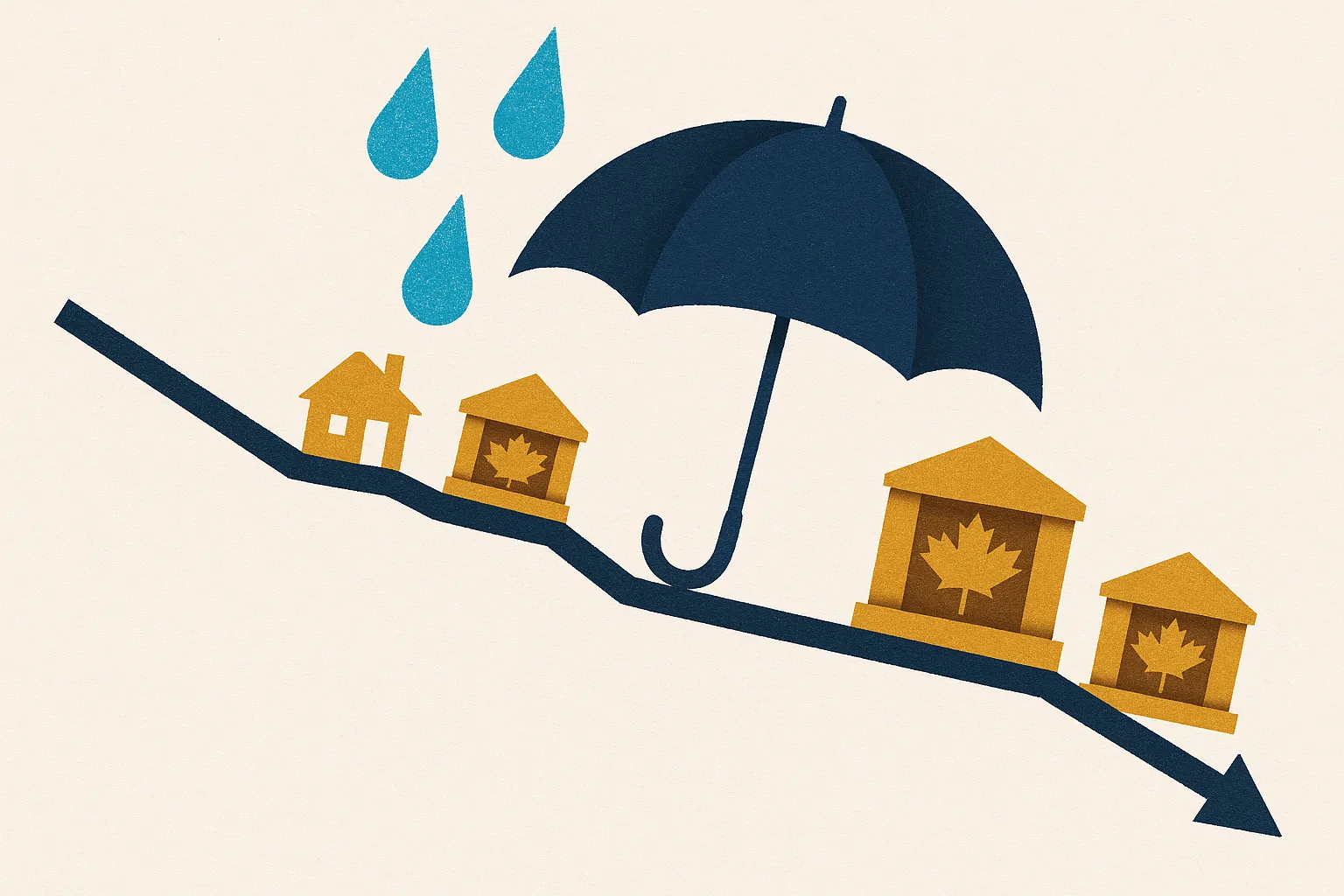
Good morning from Toronto, where the banking sector just got a reality check that should worry every borrower in the country. Fitch Ratings dropped its Q2 2026 assessment of Canadian banks on June 1, and the verdict isn't pretty — 'mixed' results with most institutions showing weaker top-line performance.
When credit rating agencies start using words like 'mixed' and 'modestly lower,' it's code for trouble brewing. And if you're holding a variable-rate mortgage or thinking about refinancing, you need to pay attention.
The Numbers Behind the Warning
Fitch Ratings' June 1 report paints a concerning picture of Canada's banking sector heading into the traditionally busy summer lending season. While the agency stopped short of downgrading any major institution, the fact that 'most' banks showed declining top-line performance suggests systemic pressures rather than isolated incidents.
This matters because Canadian banks are the backbone of our lending market. When they struggle, credit tightens. When credit tightens, borrowing costs rise — even if the Bank of Canada holds rates steady.
What This Means for Borrowers
The timing couldn't be worse. With no major housing data releases in the past 24 hours, we're flying blind on the real estate market just as banks are showing signs of stress. This information vacuum is dangerous for borrowers trying to make decisions.
Here's what we know: banks facing revenue pressure typically respond in three ways:
- Tightening lending criteria
- Widening spreads between prime and actual lending rates
- Reducing promotional rates and cashback offers
If you're considering a personal loan or mortgage refinancing, the window for favourable terms may be closing faster than you think.
The Data Desert Problem
What's equally troubling is the complete absence of fresh economic data. No Bank of Canada commentary, no inflation numbers, no employment statistics — nothing. In normal times, this might just be a scheduling quirk. But when banks are struggling and we're heading into what could be a pivotal summer for the economy, this information blackout is problematic.
The last substantive think tank research we've seen focused on labour markets and infrastructure — important topics, but not directly addressing the lending and housing questions that matter most to Canadian borrowers right now.
| Indicator | Status | Last Update |
|---|---|---|
| Bank Q2 Performance | Mixed/Declining | June 1, 2026 |
| Housing Market Data | No Updates | N/A |
| BoC Commentary | Silent | N/A |
| Employment Data | No Release | N/A |
Reading Between the Lines
Fitch's assessment comes at a critical juncture. Q2 traditionally captures the spring home-buying season — if banks are struggling during what should be their busy period, what happens when the market cools in the fall?
The rating agency's use of 'modestly lower' might sound benign, but in the conservative world of credit ratings, this is a yellow flag. Banks don't just see modest declines in top-line performance without underlying stress in their loan books or margin compression from competitive pressures.
For borrowers using our mortgage calculator, it might be time to stress-test your scenarios with higher rates than you initially planned.
What Borrowers Should Do Now
In this environment of banking sector uncertainty and data darkness, smart borrowers need to act defensively:
1. Lock in rates where possible. If banks are facing revenue pressure, promotional rates won't last long.
2. Get pre-approved now. Lending criteria typically tighten when banks face headwinds. What qualifies today might not qualify next month.
3. Build your buffer. With banks showing weakness and no clear economic data to guide us, having extra financial cushion is critical.
4. Compare aggressively. When traditional banks struggle, alternative lenders often step up with competitive offers.
The Bigger Picture
This confluence of weak bank performance and absent economic data creates a perfect storm of uncertainty. Without inflation numbers, the Bank of Canada can't adjust policy. Without housing data, borrowers can't gauge market direction. And with banks showing stress, the transmission mechanism for any future policy moves becomes less reliable.
The smart money is preparing for tighter credit conditions regardless of what the Bank of Canada does at its next meeting. When Fitch says 'mixed,' experienced borrowers hear 'defensive.'
FAQ
How significant is Fitch's 'mixed' assessment of Q2 2026 bank results?
Very significant. When Fitch reports that most Canadian banks showed 'modestly lower' top-line performance in Q2 2026, it signals potential tightening of credit conditions ahead. Credit rating agencies choose their words carefully, and 'mixed' results during what should be a strong quarter is a warning sign.
Why does the absence of housing and economic data matter right now?
With zero housing market updates, Bank of Canada commentary, or employment data in the past 24 hours, borrowers and lenders are operating blind at a critical time. This information vacuum, combined with weakening bank performance, creates uncertainty that typically leads to more conservative lending practices.
What should borrowers with existing variable-rate loans do given Fitch's report?
Consider locking in rates soon. With banks showing Q2 2026 revenue pressure according to Fitch's June 1 report, spreads between prime and actual lending rates often widen. Variable-rate holders should model scenarios with rates 50-100 basis points higher than current levels.